
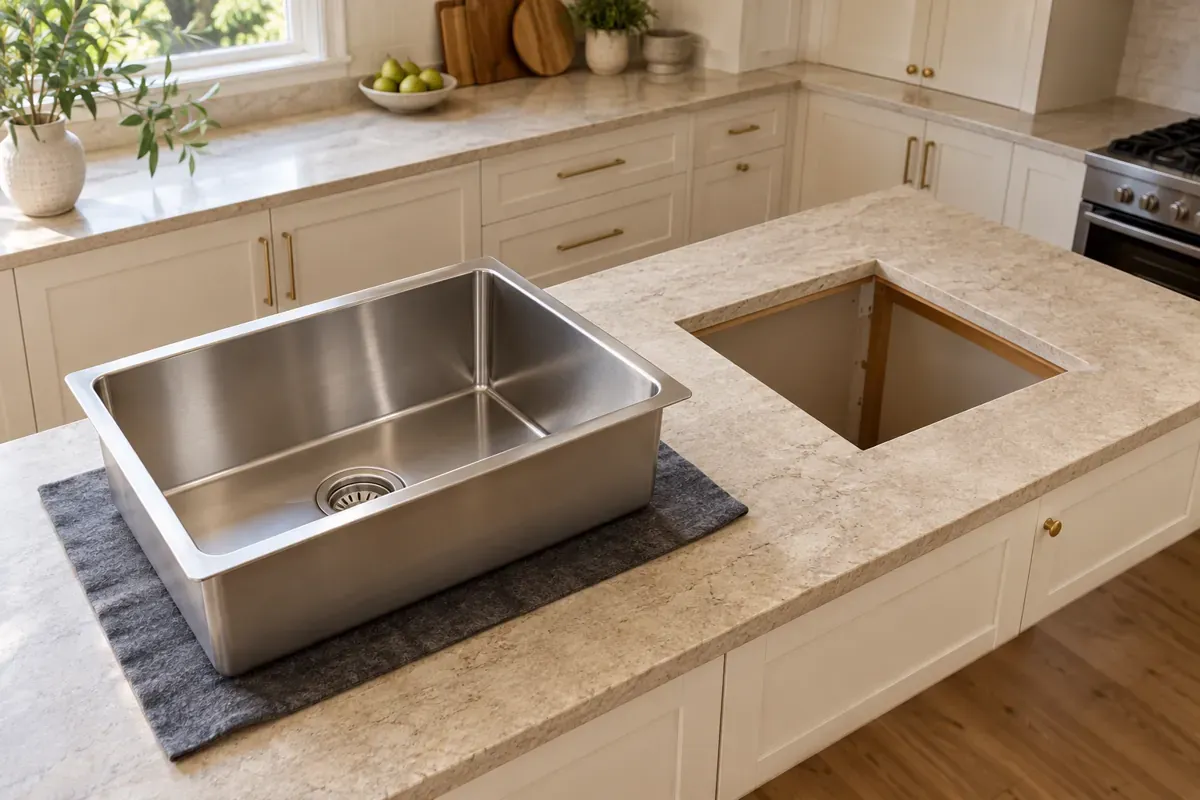
Start with the mounting style
A topmount sink has a rim that usually covers the cut edge. An undermount exposes that edge and requires suitable finishing and support. Switching styles can mean more than enlarging the hole, and an existing rough or damaged opening may not suit an exposed finish.
Check the cabinet and plumbing space
Measure usable cupboard space and provide images of the current bowl and waste arrangement. The new bowl may interfere with rails, drawers or pipework. Ask the plumber to review connection requirements before the old sink is removed.
Look at the remaining stone
The front rail and narrow strips around the sink need sufficient sound support. Nearby joins, cracks and tap holes can restrict an enlargement. A larger sink is not automatically feasible just because its outer rim fits on the top.
Avoid an expensive mismatch
If a new sink is smaller than the existing opening, cutting cannot close the gap. Filling the unused area usually leaves a visible result. Consider a suitable larger-covering model or a replacement benchtop section before committing to an unsuitable sink.
Related planning information
Questions, answered.
Why does the sink mounting style matter?
A topmount flange covers the cut edge, while an undermount sink leaves that edge visible. The required opening shape, support and finishing differ.
How do I request a quote?
Send your suburb, photos, current and proposed dimensions and the exact appliance or fitting details. We confirm suitability and the written scope before booking.